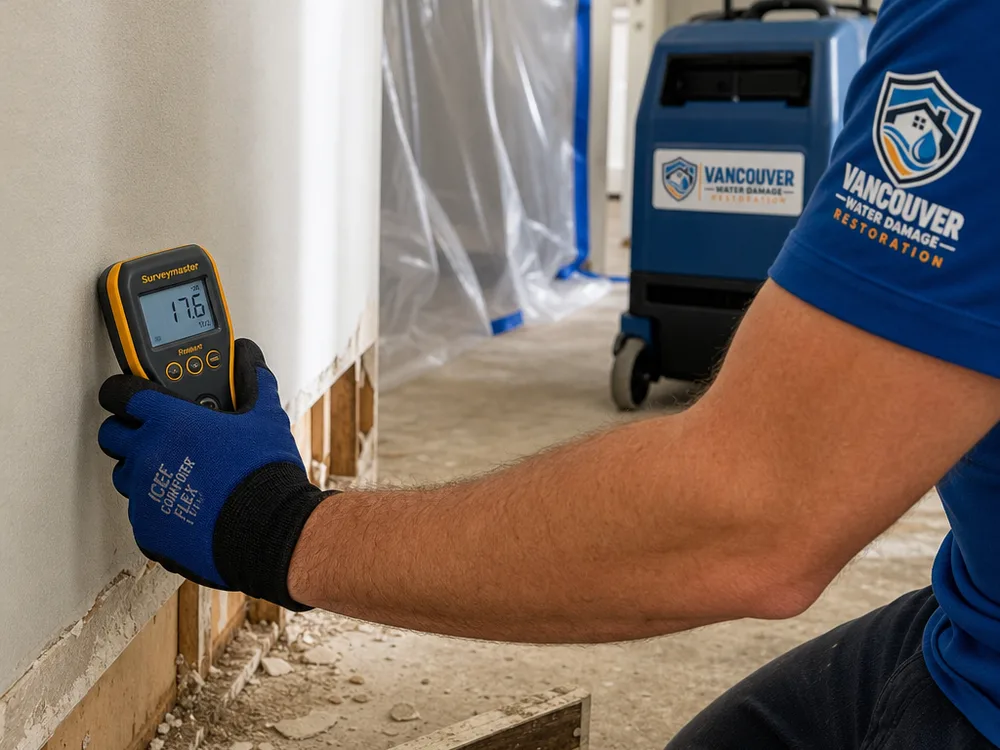
Moisture mapping, not guesswork
We use moisture meters and targeted inspection to map affected materials (flooring, drywall, baseboards, subfloor) so drying and removal decisions match real conditions.
Serving Vancouver, Washington & surrounding areas
24/7 Emergency Response
When water gets into flooring, drywall, or cabinets, time matters. Get a clear plan, rapid extraction and drying, and careful restoration work that protects your property and gets you back to normal sooner.
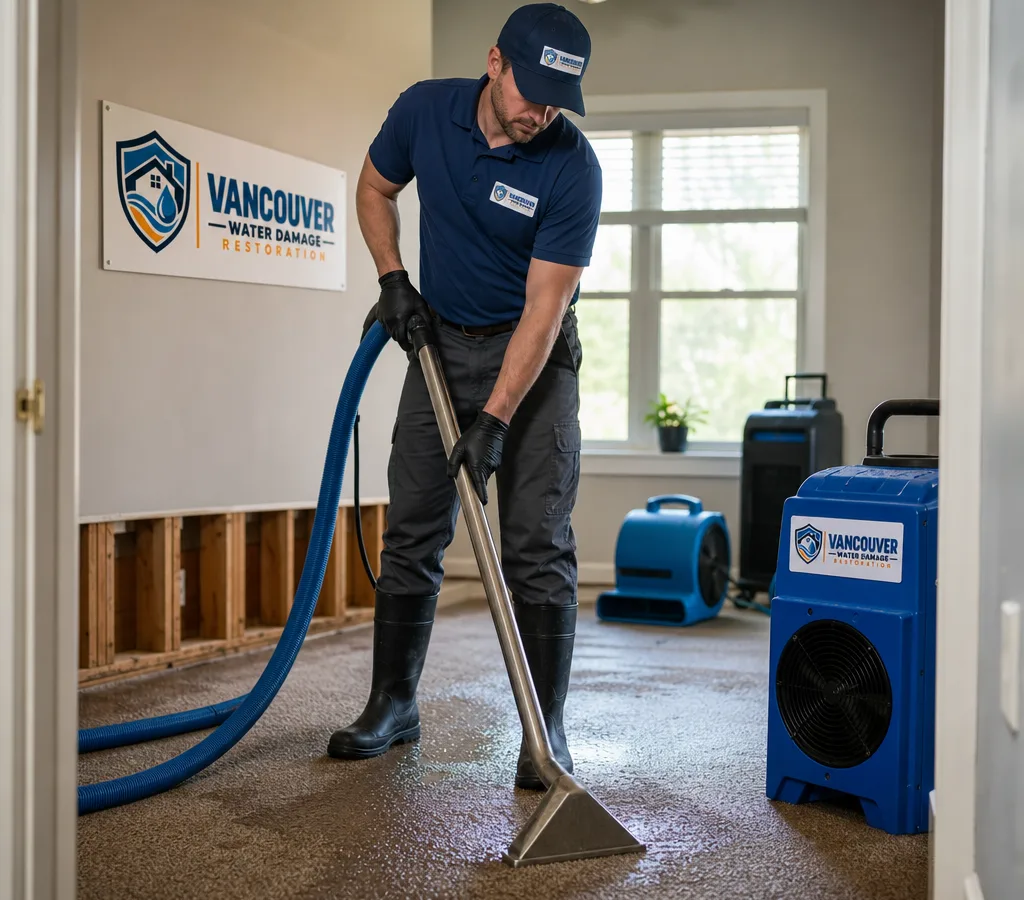
If you are searching for water restoration Vancouver WA, you are likely dealing with a leak, an overflow, or water that has already moved beyond the obvious puddle. Water follows gravity, wicks into carpet pad, and can travel through wall cavities and under floating floors. The right next step is a measured response: remove the water you can see, find the water you cannot, dry the structure, and repair what cannot be saved.
Vancouver Water Damage Restoration handles water restoration for both homes and commercial spaces in Vancouver, WA (98661). We focus on practical outcomes: stopping further damage, drying to appropriate targets, documenting conditions, and restoring the affected areas with workmanship you can live with.
You will get straightforward communication about what is wet, what must be removed, what can be dried in place, and what the realistic timeline looks like. Vancouver Water Damage Restoration shares our local service focus and approach.
We use moisture meters and targeted inspection to map affected materials (flooring, drywall, baseboards, subfloor) so drying and removal decisions match real conditions.
We remove standing water, then set up dehumidification and air movement to dry the structure in a controlled way and reduce secondary damage.
When materials cannot be dried safely or are already compromised, we remove only what is necessary to open cavities, prevent trapped moisture, and prepare for restoration.
After drying, we help bring the space back. That can include drywall repair, trim replacement, flooring transitions, and finish-ready prep based on the affected scope.
We document moisture readings, equipment placement, and progress so you have a record of what was done and why, especially helpful when an insurance claim is involved.
Water problems in Vancouver often show up the same ways we see across the Pacific Northwest: supply line failures, appliance leaks, toilet overflows, and roof or window intrusion during wet weather. The detail that changes the plan is not the source alone. It is where the water traveled and what it touched.
In newer construction near areas like Fishers Landing, water can move quickly under floating floors and into tight wall bays. In established neighborhoods such as Rose Village or Arnada, you may have layered flooring and older trim details that require more careful removal and matching during restoration. In downtown Vancouver and around Vancouver Heights, multi-family buildings and shared walls can add coordination needs, access limits, and strict dry-time requirements before finishes go back.
A good water restoration plan accounts for these constraints, sets drying targets, and prevents hidden damp areas from being sealed back up. That is how you avoid repeated odors, cupping floors, or paint and texture failures weeks later.
We identify the affected areas, check for obvious electrical or ceiling hazards, and confirm the water source is controlled. Then we outline immediate next actions so you can make decisions quickly.
Standing water is extracted first. If wet carpet pad, swollen baseboards, or saturated drywall cannot be dried effectively, we remove them to stop wicking and expose wet cavities.
We place air movers and dehumidification appropriate to the space and affected materials. Moisture readings guide adjustments so the drying plan fits the actual conditions, not a fixed template.
Depending on the category of water and what was impacted, we clean and treat surfaces to reduce microbial risk and prevent persistent odor in porous materials.
Once dry targets are met, we review what needs to be rebuilt or repaired. We can coordinate the restoration scope so finishes go back on stable, dry materials.
Water restoration in Vancouver typically ranges from about $1,200 to $6,000+, with small, contained drying jobs at the lower end and larger losses with demolition and rebuild at the higher end. A simple extraction and a few days of drying equipment can be $1,200 to $2,500, while multi-room damage with flooring removal, drywall work, and content handling commonly runs $3,000 to $10,000+.
Final price depends on how far water traveled, the materials affected (carpet pad, hardwood, drywall, insulation, cabinets), access constraints, required containment, and the number of drying days. The exact scope and cost are confirmed after an on-site inspection and moisture mapping.
“A supply line leaked while we were out and the water got under the flooring. They explained what could be dried in place, what had to come out, and kept checking moisture until it was actually dry. The plan was clear from day one.
“We run a small office and needed downtime minimized. They extracted the water the same day, set up drying that didn't block our whole space, and documented everything for our claim.”
Start water restoration immediately after the water source is stopped, because moisture can wick into drywall, subfloor, and insulation quickly. In Vancouver's humid shoulder seasons, the longer materials stay wet, the harder it is to dry them without removal and the higher the risk of odor and microbial growth.
Some drywall can be dried if it is only mildly affected and you can dry both sides or create the right airflow, but swollen, crumbling, or heavily saturated drywall usually needs removal. The decision should be based on moisture readings and whether the wall cavity can actually be dried without trapping moisture behind paint and texture.
Mitigation is the immediate work that stops ongoing damage, like extraction, removing wet materials, and structural drying, while restoration is the repair work that brings the space back, like drywall, trim, flooring transitions, and paint-ready prep. Most real projects in Vancouver involve both phases, even if they happen under separate scopes.
Yes, we provide practical documentation such as photos, moisture readings, equipment placement, and the drying timeline, which helps support a claim and reduces back-and-forth. Coverage and approvals depend on your policy and the cause of loss, but clear documentation makes the process smoother.
Structural drying commonly takes 3 to 5 days, but it can be shorter for small, well-contained losses or longer when water is trapped under flooring, behind cabinets, or inside insulated wall cavities. The only reliable way to set the timeline is to monitor moisture and adjust equipment based on progress.
Stop the water source if it is safe, shut off power to affected areas if outlets or wiring may be wet, and move valuables and electronics away from the wet zone. Avoid running household fans into wall cavities without a plan, because it can spread moisture and contaminants; professional drying works best when airflow and dehumidification are controlled.
Tell us what happened and what areas are affected. We will schedule an on-site assessment, explain what can be dried versus removed, and lay out the next steps to restore your Vancouver, WA property with minimal disruption.