Sampling that matches the question
We do not default to a one-size checklist. If the concern is a musty odor and symptoms, air sampling may be the priority. If there is a visible patch, a surface sample may answer it faster.
Serving Vancouver, Washington & surrounding areas
24/7 Emergency Response
If you smell something musty, see spotting, or your allergies spike indoors, testing is the fastest way to replace guesses with clear, written results and a practical next step.
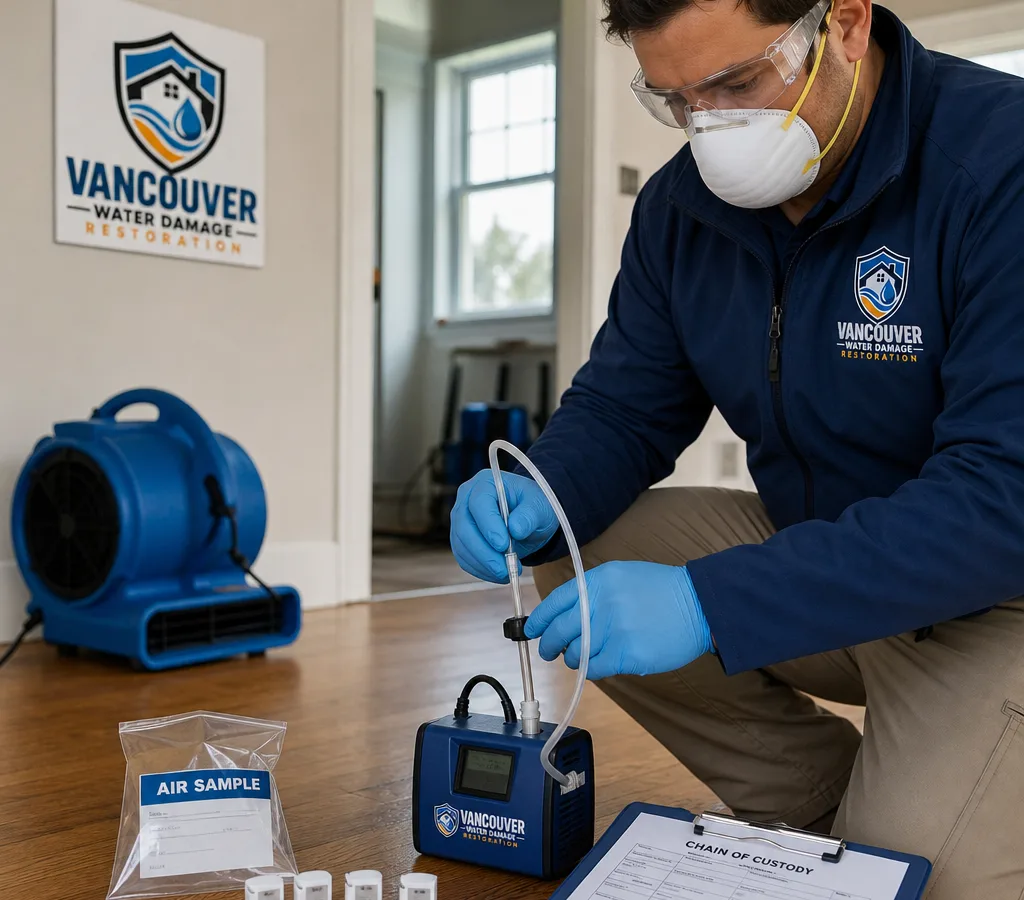
Mold testing Vancouver WA is most useful when you need evidence, not assumptions. Mold can be hidden behind baseboards, under flooring, or inside wall cavities. Even when it is visible, testing helps confirm what you are dealing with and whether spores are showing up in indoor air.
Common reasons people schedule testing:
Vancouver sits near the Columbia River and sees long stretches of wet weather. That does not mean every home has a mold problem, but moisture can linger in basements, crawlspaces, and wall assemblies when ventilation and drying are not right. Testing helps determine whether an issue is localized or may be affecting indoor air quality.
A proper mold test starts with an on-site assessment, then sampling that matches what we see and what you are experiencing. We collect samples to answer a decision: where the problem is, how widespread it is, and what to do next.
Typical components of a testing visit:
After a leak or flooding, testing is one part of a larger plan. Confirming moisture history first helps testing fit into the right sequence without rushing you into unnecessary work.
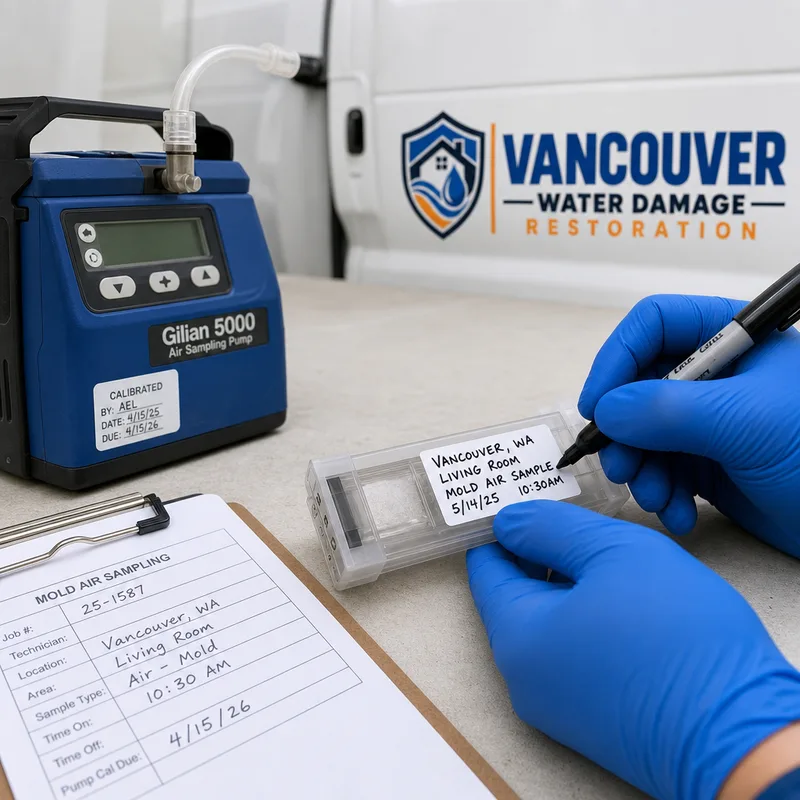
We do not default to a one-size checklist. If the concern is a musty odor and symptoms, air sampling may be the priority. If there is a visible patch, a surface sample may answer it faster.
Mold follows moisture. We look for damp materials, condensation points, and likely pathways so results can be tied to a cause, not just a lab label.
You receive written findings summarizing what was inspected, what was sampled, where samples were taken, and what the results mean for next steps.
Testing can help scope what should be addressed or verify conditions after cleanup. Post-remediation checks are planned around containment removal and normal HVAC operation.
We test houses, condos, rentals, and small commercial spaces where indoor air questions require documentation for owners, tenants, or property management.
A lab report is only useful if it leads to a practical decision. Air and surface samples typically identify spore types and concentrations. The key is comparing indoor results with an outdoor reference sample and the context of the building.
We explain whether the findings suggest monitoring, a small targeted cleanup, or containment and remediation for a larger affected area.
You tell us what you are noticing—odor, visible growth, health irritation, or recent leaks—and which areas are involved. That helps us plan the right sampling approach.
We inspect concern areas and check building-material moisture where appropriate. If open windows, heavy cleaning, or unusual ventilation could skew results, we explain the impact.
We collect air and/or surface samples based on the inspection. Every sample is labeled and documented by location so the report remains actionable.
Samples go to an accredited laboratory for analysis. You receive written findings, sample locations, and next-step guidance based on the data.
If results point to active moisture or significant indoor impact, we explain source control, cleaning scope, containment considerations, and whether verification testing makes sense.
Mold testing in Vancouver typically ranges from about $300 to $900+, depending on the number of samples and whether moisture mapping and a full written report are included. A basic visit with limited sampling is usually at the lower end, while multi-room air sampling, surface samples, and additional documentation cost more.
Price depends on sample count, crawlspace or attic access, home size, and whether post-remediation clearance testing is needed. Exact cost is confirmed after the on-site inspection and sampling plan are set.
“We had a musty smell that came and went after storms. The inspection explained where moisture was getting in, and the report made it clear what needed to be fixed first before any cleanup.
“They sampled the rooms we were worried about and also took an outdoor comparison sample, which helped us understand the results instead of guessing. The written findings were easy to share with our contractor.”
Most mold testing appointments take about 60 to 120 minutes on-site, depending on the number of rooms, crawlspace or attic access, and how many samples you choose. We also document locations so results are tied to specific areas.
Surface sampling confirms what a visible spot is, while air sampling helps evaluate spores in the breathing zone. In homes with an odor but no visible growth, air samples plus a moisture-focused inspection often provide useful direction.
Keep the home in normal living conditions, usually with windows closed and HVAC operating as you typically run it. Airing out the home, heavy cleaning, or running air scrubbers can change air-sample results.
Yes, when there is safe access. Crawlspaces are common local concern areas because moisture can linger with poor vapor-barrier coverage or limited ventilation. Inspection and sampling can help determine whether a concern is localized or affecting indoor air upstairs.
Yes. Post-remediation testing is typically scheduled after the work area has been cleaned, containment is ready to come down, and the space has returned to normal airflow conditions.
Testing identifies what is present and where it appears, while inspection and moisture mapping point to likely sources. Intermittent rain intrusion or seasonal condensation may require targeted checks and monitoring.
Tell us what you are noticing and where it is happening. We will schedule an inspection, collect the right samples, and deliver written findings that help you decide what to do next.