
After a flood or long dry-out
If materials stayed wet too long, mold can grow behind baseboards, under flooring, and inside wall cavities. Remediation focuses on controlled removal and detailed cleaning before rebuild.
Serving Vancouver, Washington & surrounding areas
24/7 Emergency Response
If you have visible growth, musty odors, or moisture after a leak, our certified team contains the area and removes affected materials safely, leaving you with a clear plan to keep mold from returning.
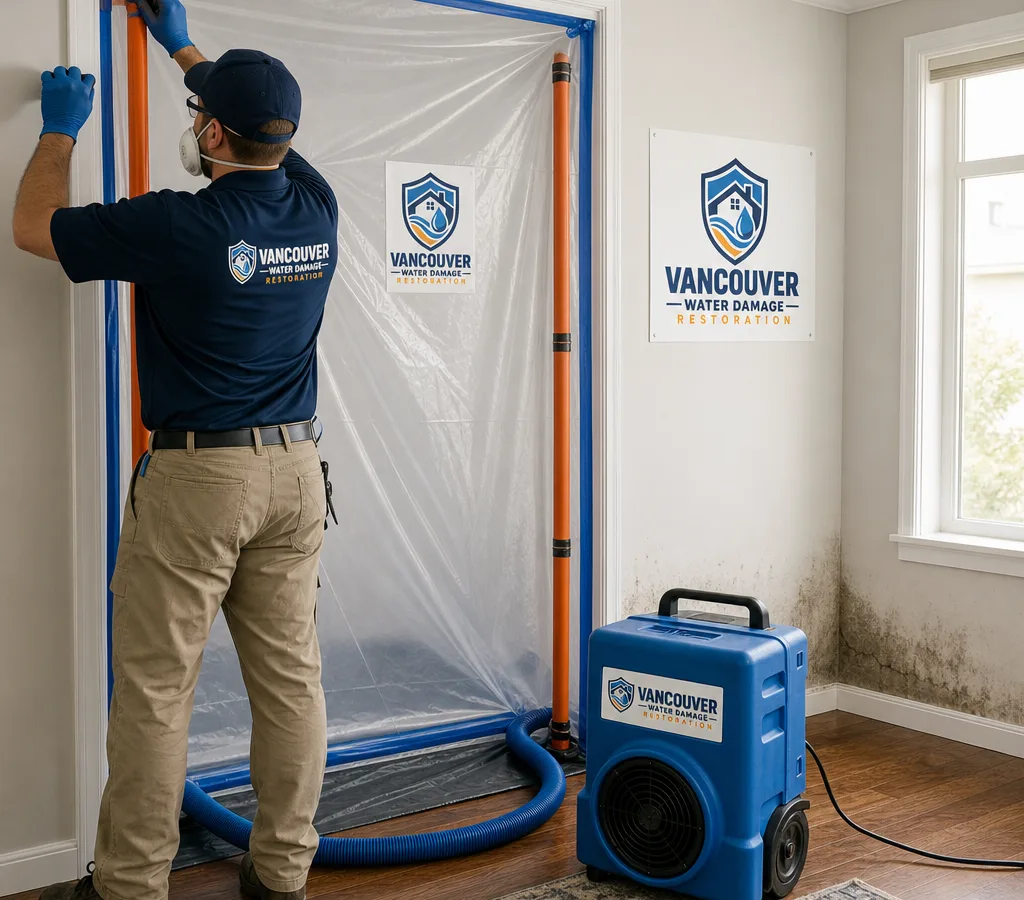
Searching for mold remediation Vancouver WA usually means something is already off: a damp smell that will not leave, dark spotting on drywall, or a space that never seems to dry out.
In Southwest Washington, wet seasons and day-to-day humidity can keep framing, drywall, and insulation damp long enough for mold to grow when a leak, condensation, or poor ventilation is also in the mix.
Vancouver Water Damage Restoration handles mold remediation in Vancouver for residential and commercial properties. The goal is straightforward: stop the spread, remove contamination safely, clean what can be saved, and document what we find so you know what happened and what to fix.
Mold remediation is not the same as surface cleaning. If source moisture remains or contamination is inside wall cavities, under flooring, or above ceilings, wiping visible growth does not solve the problem. A proper job is built around containment, pressure control, removal, and verification.
A good mold remediation plan is based on the material types, the affected area, and how air moves through the building.
We identify likely moisture sources, map affected materials, and explain what needs to be removed versus cleaned.
We isolate the work zone with plastic sheeting and run filtered air scrubbers to keep spores and dust from migrating into clean areas.
Colonized porous materials such as drywall, insulation, carpet pad, and some ceiling tiles are removed in a controlled way to reduce airborne debris.
Remaining structural surfaces are cleaned using HEPA filtration and appropriate antimicrobial steps based on the substrate.
We verify moisture is moving in the right direction and provide photos and a written summary of what was found, removed, and should be corrected.
If growth followed a leak or overflow, the best outcome pairs remediation with a real moisture fix and drying strategy. Mold is a moisture problem first.
Request Emergency Service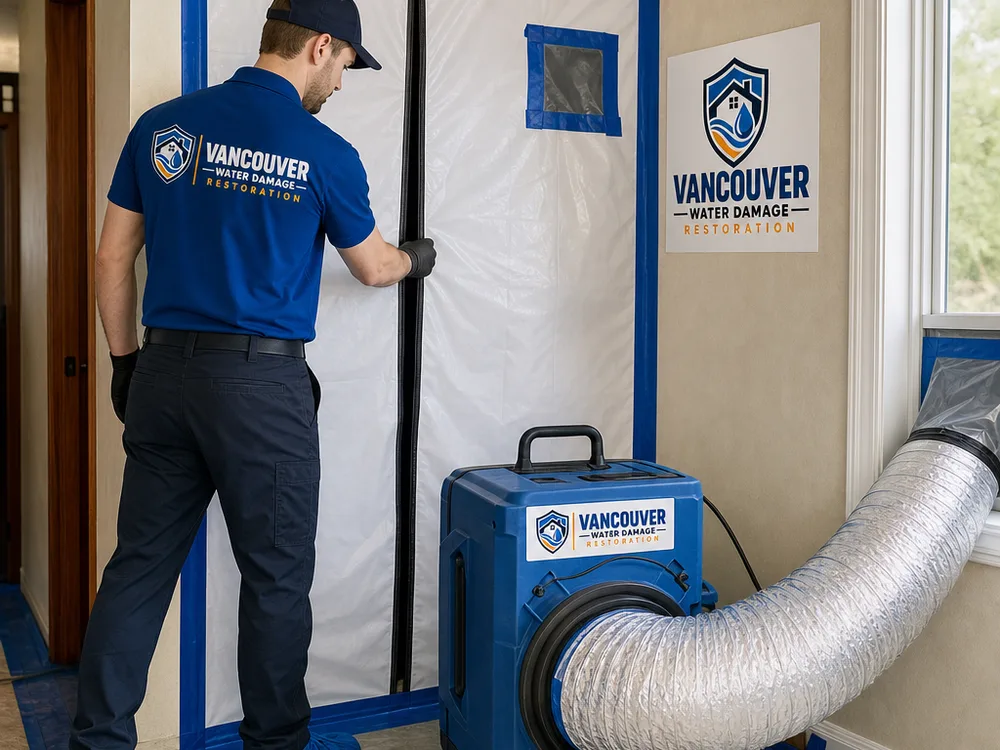
If materials stayed wet too long, mold can grow behind baseboards, under flooring, and inside wall cavities. Remediation focuses on controlled removal and detailed cleaning before rebuild.
Chronic humidity and weak exhaust ventilation can feed growth on drywall, window trim, and behind cabinets. We look for condensation and wet framing near plumbing penetrations.
These spaces trap moisture from ground vapor and foundation leaks. Work may include removing contaminated insulation, cleaning framing, and confirming moisture control.
Roof leaks, blocked vents, and bathroom fans exhausting into attics can create growth on sheathing. We isolate and clean or remove affected materials and recommend ventilation corrections.
Slow leaks often go unnoticed until cabinet materials swell or odors appear. We check toe kicks and adjacent drywall where moisture wicks and hides.
We identify affected materials and the likely moisture source, then explain what will be removed, what can be cleaned, and how adjacent rooms will be protected.
We build plastic barriers and establish negative air pressure with HEPA-filtered equipment so disturbed spores and dust remain in the work area.
Materials that cannot be reliably cleaned are carefully removed and bagged. We aim to remove only what is necessary to reach clean structure.
We HEPA vacuum and wipe structural components and non-porous surfaces, applying compatible antimicrobial treatment when appropriate.
We confirm the area is drying properly, document relevant readings, and recommend repairs or improvements that reduce recurrence.
Most mold remediation projects in Vancouver typically fall around $1,500 to $6,500, with small, contained areas often closer to $1,000 to $2,500 and larger multi-room or hidden growth projects reaching $7,500+ depending on demolition and rebuilding needs.
Price changes with the affected area, mold location, how much porous material must be removed, containment complexity, and whether drying equipment is needed. Exact cost is confirmed after an on-site inspection and written scope.
“We found mold behind the vanity after a slow leak. The crew sealed off the bathroom, kept the rest of the house clean, and explained exactly what had to be removed versus what could be cleaned. The documentation helped us plan the repairs without guessing.
“They tracked down the damp area that kept coming back, set up negative air, and the musty odor was gone once the contaminated drywall and insulation were removed. The process was orderly and the communication was clear.”
Most small to mid-size contained projects take 1 to 3 days. Larger or harder-to-access projects may take longer when demolition and drying are involved.
Yes, but hidden growth usually requires controlled demolition. We build containment first, remove affected porous materials, clean remaining structure with HEPA methods, and verify dryness before repairs.
Often you can remain if the work area is fully contained. For main living areas, multiple rooms, or occupants sensitive to dust and odors, we recommend the safest option based on scope.
Mold is far less likely to return when the moisture source is corrected and materials are properly dried before repairs. Persistent leaks or ventilation problems can cause recurrence.
Coverage depends on your policy and the cause. Mold related to a sudden covered water event is sometimes covered, while long-term leaks or maintenance issues often are not. We provide photos and a written scope for claim review.
If safe, stop the moisture source and avoid scrubbing or running fans that blow air into adjacent rooms. Keep the affected space closed and tell us about recent leaks, plumbing work, or roof issues.
Share what you are seeing and where it is showing up. We will schedule an inspection, explain containment and removal options, and provide a written scope you can use to move forward with repairs confidently.