Emergency water extraction
Truck-mounted or portable extraction removes standing water, followed by targeted removal of wet materials when needed to reach hidden moisture.
Serving Vancouver, Washington & surrounding areas
24/7 Emergency Response
Fast response, careful documentation, and professional drying to protect your home or building and reduce repair scope after a leak, flood, or sewer backup.
When water shows up where it should not, time and method matter more than almost anything else. If you are searching for water damage Vancouver, WA support, you are likely trying to stop additional damage, prevent mold growth, and get a clear plan for cleanup and repairs.
Vancouver Water Damage Restoration responds to residential and commercial losses across Vancouver and nearby areas. We start by identifying the water source and affected materials, then move into extraction, controlled drying, and documentation. Insurers and property managers often need photos, moisture readings, equipment logs, and a written scope.
Water can move farther than it looks. It wicks under baseboards, migrates through subfloors, and collects in wall cavities. Our approach is to verify drying with measurements, not guesswork.
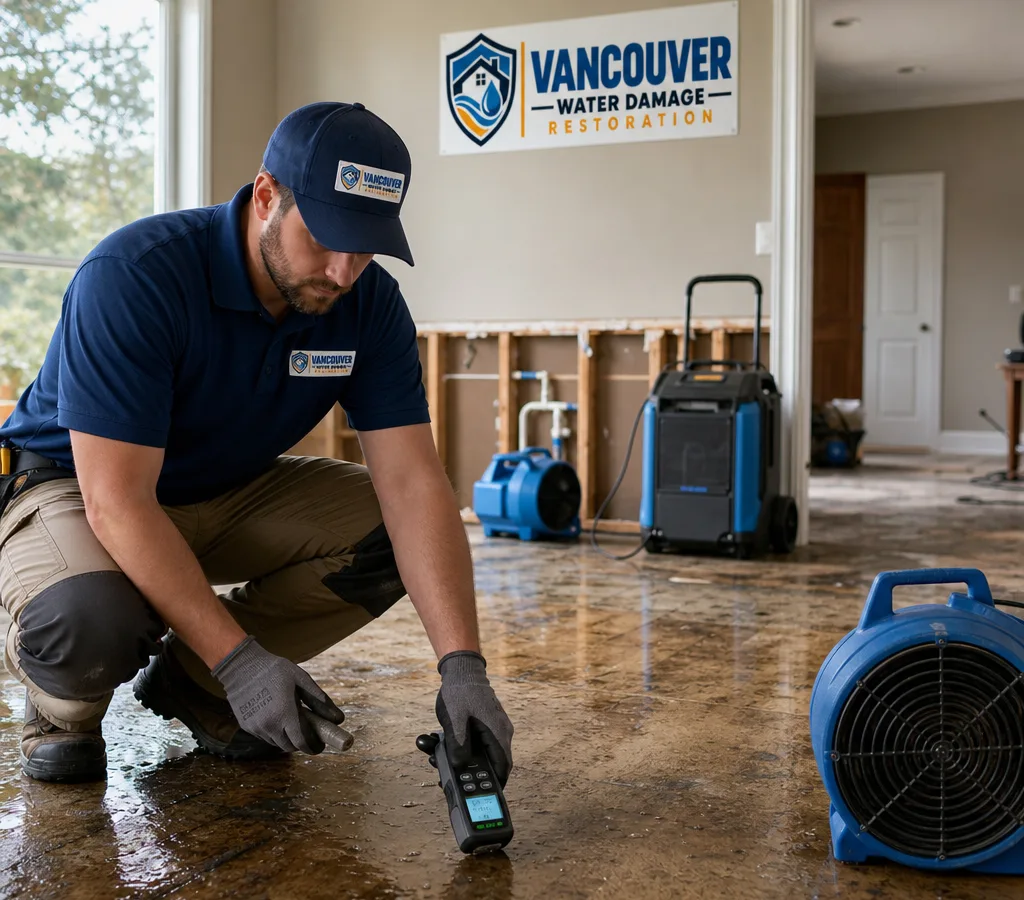
Truck-mounted or portable extraction removes standing water, followed by targeted removal of wet materials when needed to reach hidden moisture.
Air movers and dehumidifiers are sized to the space, with daily monitoring and adjustments based on temperature, humidity, and moisture readings.
Common sources include supply line failures, water heater leaks, dishwasher and laundry overflows, and toilet tank leaks that soak floors and walls quickly.
Moisture in enclosed spaces needs controlled airflow and verification. Wet insulation and vapor barriers often require selective removal for proper drying.
Category 3 losses require safety controls, careful demolition of impacted porous materials, cleaning, and proper disposal before drying and rebuild planning.
Photo sets, moisture maps, and clear scope notes help support coverage decisions and keep owners, tenants, and adjusters aligned on what is being done.
A solid water-damage plan starts with classification and measurement. We look at the source and type of water—clean, gray, or contaminated—how long materials have been wet, and what building assemblies are involved, including drywall, insulation, hardwood, tile, and subfloor layers.
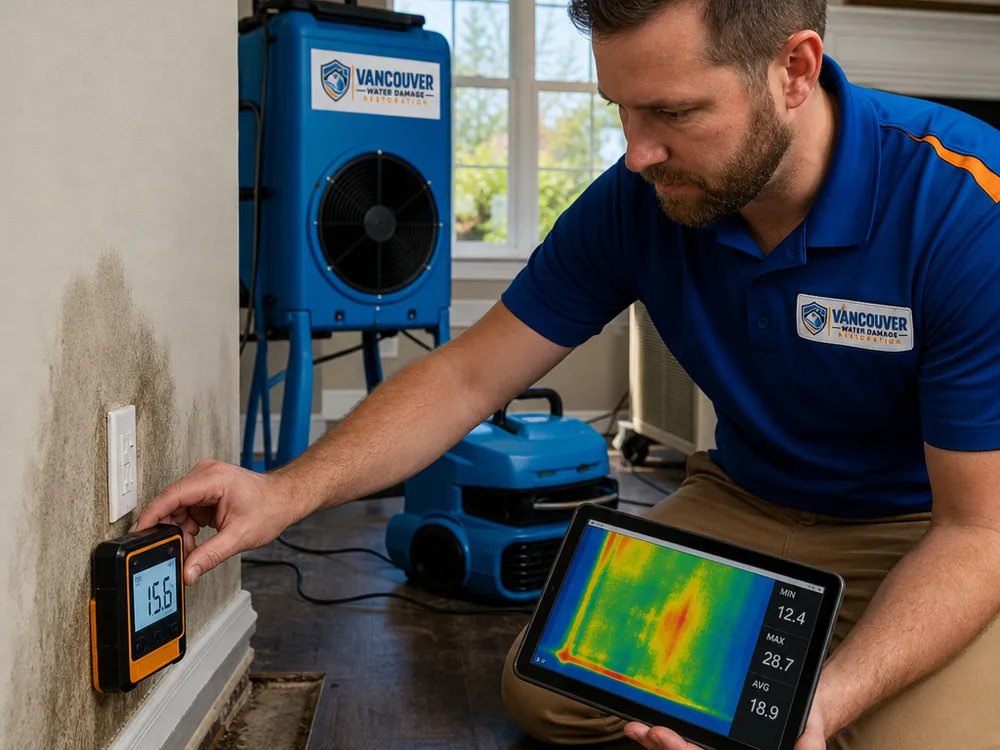
Then we map moisture. We use moisture meters and thermal imaging as a screening tool to locate likely wet areas, then confirm with direct readings. This matters in Vancouver because many damage calls come from slow leaks that spread over days. The visible stain is rarely the edge of the problem.
Drying is controlled, not just “turn on fans.” Equipment is placed to move air across wet surfaces and pull moisture from the air so evaporation can continue. We monitor and adjust until materials reach an acceptable dry standard for the assembly.
If we find materials that cannot be salvaged safely, we explain why and document the condition before removal.
We confirm the water is stopped or coordinate with a plumber, check electrical and slip hazards, and set containment if contamination is involved.
We identify affected rooms and assemblies, document conditions with photos and readings, and outline what can be dried in place versus what needs removal.
Standing water is extracted first. If water is trapped behind walls or under floors, we open targeted areas to reach wet cavities and prevent lingering moisture.
We set drying equipment, track temperature and humidity, and take ongoing moisture readings. Equipment placement changes as conditions improve.
When needed, we clean affected surfaces, address odor sources, and coordinate the handoff to repairs so rebuilding starts with dry, stable materials.
Water damage is always time-sensitive, but local conditions and building types change what matters most during mitigation.
In slab-on-grade homes, water can travel under flooring and become trapped at transitions. You may not see it until boards cup, laminate edges swell, or baseboards discolor. In homes with crawl spaces, moisture can settle low and keep framing damp unless airflow and drying are designed for that enclosed volume.
The Columbia River corridor and low-lying areas can experience higher groundwater and seasonal rain patterns, making storm intrusions and sump-pump failures a concern. Even clean rainwater may require more than drying once it moves through insulation, dust, or crawl-space debris.
If the loss affects a shared wall, multi-family unit, or commercial tenant space, coordination becomes part of the job. We document boundaries, track affected areas by unit or suite, and keep the drying plan understandable for owners and managers.
Most water damage restoration projects in Vancouver typically range from about $1,500 to $7,500, with small clean-water dry-outs sometimes closer to $800 to $2,000 and larger losses with demolition and rebuild coordination running $10,000+.
Final cost depends on the category of water, how far moisture spread, how long it sat, access to affected areas, and how many days of equipment and monitoring are required. After an on-site inspection and moisture map, we confirm a written scope and realistic range for your property.
“A supply line leaked under our kitchen floor and the water had traveled farther than we thought. They showed us the moisture readings, explained what had to come out, and kept checking daily until it was actually dry. The documentation made insurance much easier.
“We had a toilet overflow that soaked into the hallway and a bedroom. The crew responded quickly, protected the unaffected rooms, and the drying plan was clear the whole time. No lingering smell afterward.”
Start mitigation as soon as the water source is stopped, ideally the same day, because moisture spreads through drywall, insulation, and flooring and becomes harder to dry the longer it sits. Early extraction and controlled dehumidification often reduce how much material needs to be removed later.
Sometimes, yes, if the water is clean, the wet area is limited, and moisture readings show the cavity can dry with proper airflow and dehumidification. If insulation is saturated, the water is contaminated, or the wall has no drying path, opening it is usually necessary for a safe, verifiable dry-out.
Clean water starts from a sanitary source such as a supply line, while contaminated water includes sewer backups and can contain harmful pathogens. The category affects what materials can be saved, what cleaning is required, and what safety controls are needed during demolition and disposal.
Coverage depends on your policy and the cause of loss, but many policies cover sudden, accidental events such as a burst pipe while excluding long-term leaks or maintenance issues. We document affected areas, readings, and scope for you to share with your adjuster.
Many structural drying projects take about 3 to 5 days, but the timeline changes with material type, how wet the structure is, temperature and airflow, and whether hidden cavities are involved. We monitor moisture and adjust equipment until readings confirm drying is complete.
Often you can stay if only part of the home is affected and drying equipment can run safely, but it depends on noise, humidity control, and whether demolition or contaminated water is involved. For sewer backups or extensive tear-out, temporary relocation is commonly safer.
Tell us what happened and where the water is showing up. We will inspect, map moisture, explain what can be dried versus removed, and outline the next steps so you can protect the property and move forward with confidence.