Rapid stabilization
The first priority is preventing spread: isolating affected rooms, protecting contents, and setting up drying equipment quickly when conditions call for it.
Serving Vancouver, Washington & surrounding areas
24/7 Emergency Response
When water damage disrupts your home or business, you need a steady plan: fast stabilization, careful drying, clear documentation, and repairs that put the property back in service.
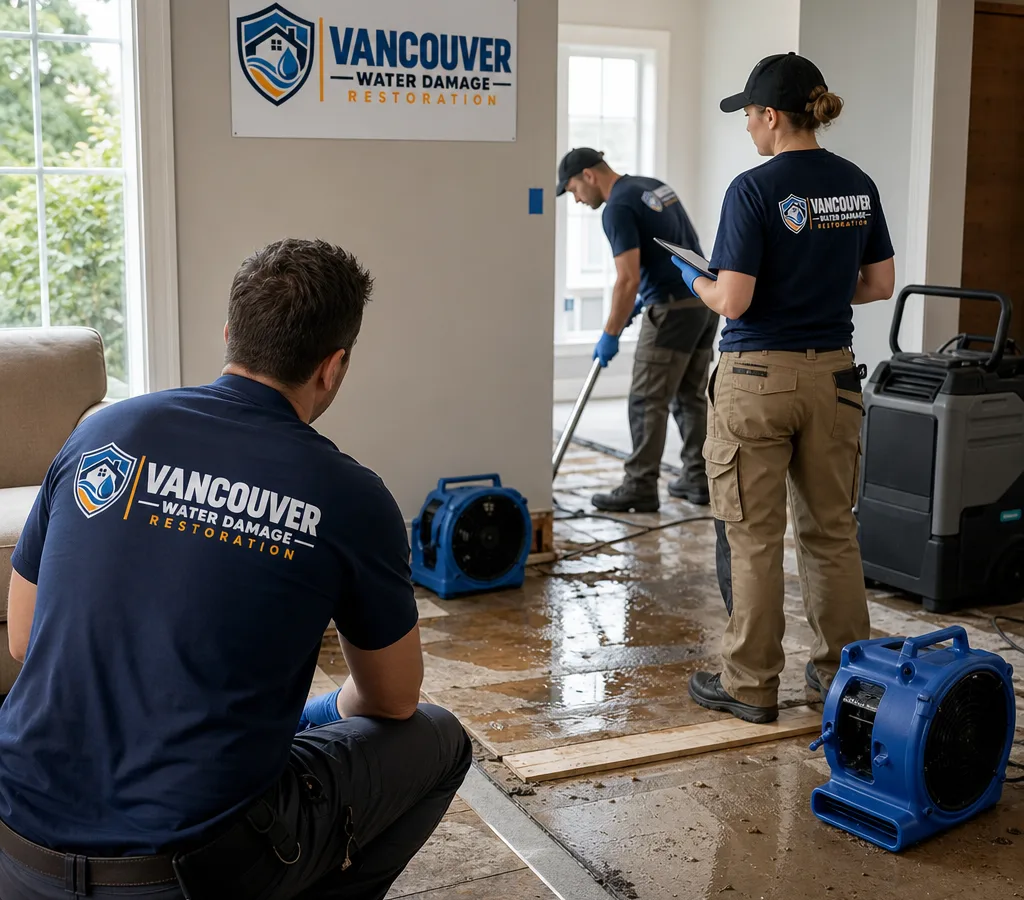
Vancouver restoration is about one thing: returning a property to safe, usable condition after damage, without creating new problems along the way. That starts with stabilizing the situation—stopping the water source when possible and protecting unaffected areas—and continues through drying, cleaning, and repair.
In Clark County, homes and small commercial spaces include newer construction and older buildings with different wall assemblies and floor systems. Drying a slab-on-grade room is different from drying a crawlspace home, while laminate flooring reacts differently than tile over backer board. A good restoration plan matches the structure, materials, and scope.
Vancouver Water Damage Restoration uses an inspection-first approach, moisture tracking, and a written scope that makes sense to homeowners, property managers, and adjusters. Restoration is treated as a controlled project—not a quick mop-up.
The first priority is preventing spread: isolating affected rooms, protecting contents, and setting up drying equipment quickly when conditions call for it.
Moisture meters and thermal imaging help locate wet building materials so drying is targeted and documented instead of based on surface appearance.
When materials need removal, containment and negative air practices help keep dust and odor from migrating into clean areas.
Restoration goes smoother when the scope is written in plain language: what is being dried, what is being removed, what is being rebuilt, and why.
Drying is planned with the rebuild in mind, so you are not left with mismatched finishes or unnecessary tear-out.
Photos, readings, and daily notes help support an insurance claim and reduce back-and-forth about what was needed.
Most restoration projects in Vancouver start with water intrusion, even when the visible damage looks small. Hidden moisture drives mold risk, swelling, and odor. A typical scope may include:
If the loss is recent, the goal is often to dry as much as can be safely saved. If water sat for a while or impacted porous materials, selective removal is usually safer. Either way, the job is managed so the property can return to normal use with predictable next steps.
For an overview of our team and service approach, Vancouver Water Damage Restoration is where many customers start before scheduling an inspection.
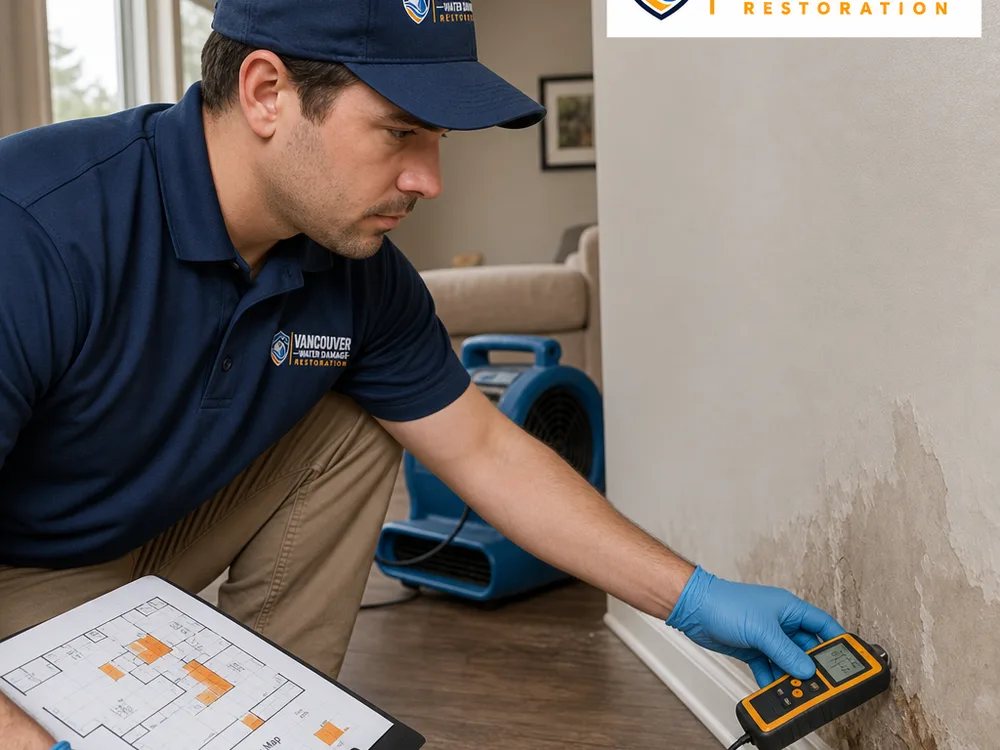
We identify the source and category of water exposure, check for electrical or ceiling hazards, and map moisture in surrounding materials so the scope is based on measurements.
We extract water as needed, protect unaffected rooms, and set up containment when demolition or heavy drying is required.
Air movers and dehumidifiers are placed based on the wet materials and room volume. We re-check readings to confirm the drying curve is moving in the right direction.
Surfaces are cleaned and treated as appropriate, with special care around kitchens, bathrooms, and utility rooms where moisture and organic residues can combine.
Once materials are dry and stable, repairs are scoped and scheduled. We aim for clean transitions so trim lines up, paint blends, and floor heights stay consistent.
You receive a clear summary of work performed and any remaining recommendations, so you are not left wondering what was done behind the walls.
Most Vancouver restoration projects tied to water damage typically range from about $1,500 to $7,500, with small dry-outs on the low end and multi-room drying plus repairs on the high end. A single affected room with minor material removal may be closer to $1,500 to $3,500, while a larger loss involving flooring, drywall, and multiple days of equipment often runs $4,000 to $12,000+.
Your final cost depends on how far water traveled, which materials are wet, access to affected areas, required containment, and how much finish work is needed. Exact pricing is confirmed after an on-site inspection and a written scope.
“They showed me the moisture readings in each wall section and explained what could be dried versus what had to come out. The plan was straightforward, and the repairs matched our existing trim and paint better than I expected.
“Our office needed to stay operational, so containment and scheduling mattered. The drying equipment was set up neatly, daily check-ins were consistent, and we got a clear summary for our records.”
You should start restoration as soon as the water source is controlled, ideally the same day, because wet drywall, baseboards, and flooring can begin to swell and trap moisture quickly. Early extraction and measured drying often reduces how much material has to be removed later, especially in wall cavities and under floating floors.
Sometimes, yes, but only when readings show the materials can be dried to an acceptable level and the water exposure was clean enough for in-place drying. We use moisture mapping to decide where small access cuts or baseboard removal is sufficient and where full removal is the safer choice.
A proper restoration estimate typically includes mitigation steps, any necessary removal of unsalvageable materials, cleaning or treatment steps, and the repair scope to return the area to pre-loss condition. If insurance is involved, documentation such as photos and moisture logs is often prepared alongside the scope.
Yes, we can provide the job notes that usually matter most: photos, moisture readings over time, equipment records, and a clear scope of what was done and why. That documentation helps align expectations with an adjuster, especially when water traveled into wall cavities or under flooring where damage is not visible.
Drying commonly takes several days, and repairs take additional time depending on trades, materials, and matching existing finishes. After inspection, we outline what can be completed immediately, what depends on drying milestones, and what the repair timeline looks like for your specific rooms.
Yes, restoration applies to both residential and commercial properties, but the plan often changes based on occupancy needs, access hours, and how the space is used. A retail or office setting may require tighter containment and a staging plan so operations can continue while drying and repairs move forward.
Describe what happened and what areas are affected, and we will schedule an inspection, explain your options, and provide a written scope and clear estimate for your Vancouver, WA property.